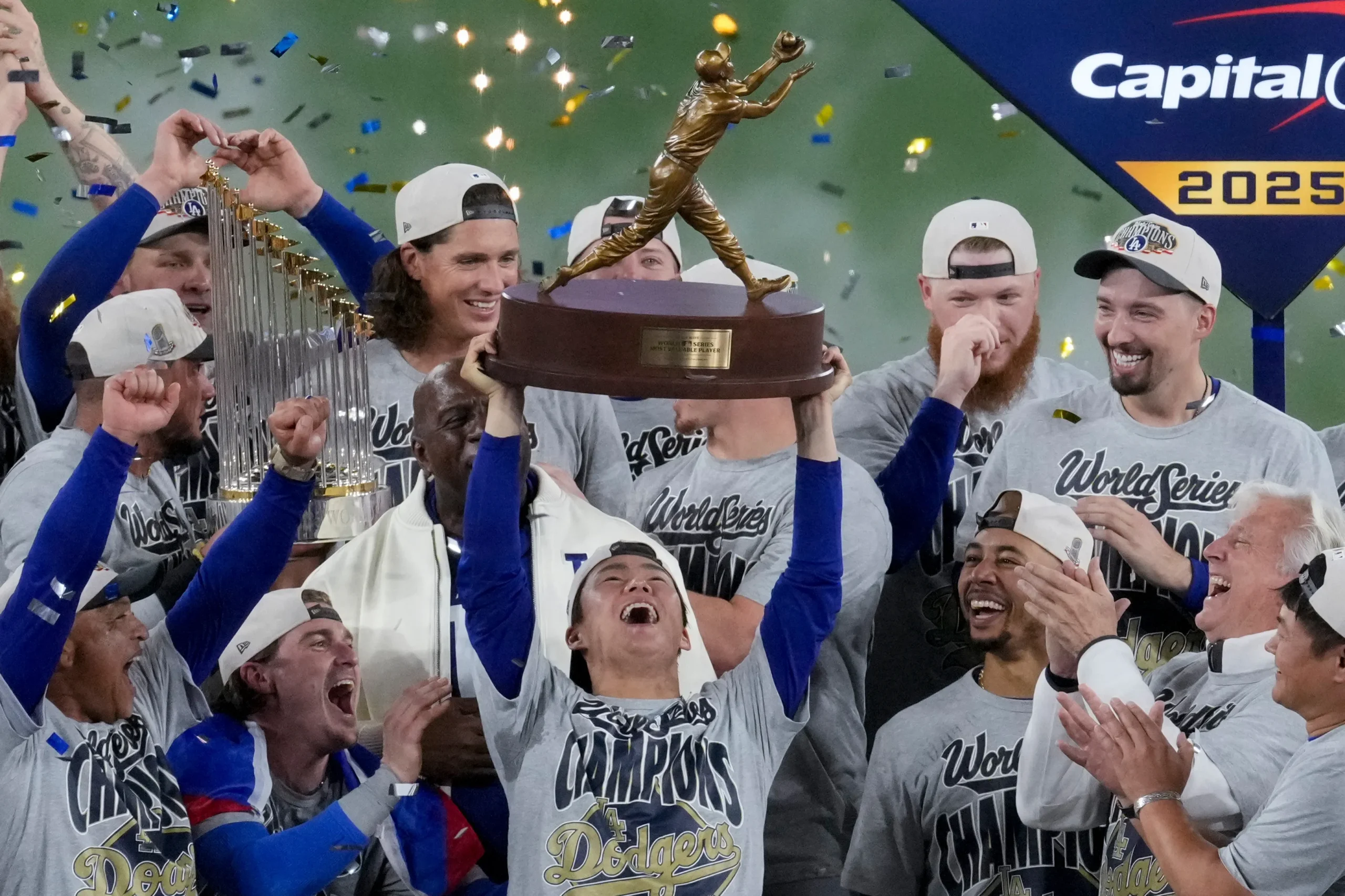
Major League Baseball (MLB) remains a high-stakes sporting arena where talent acquisition, retention, and team performance are closely tied to financial strength. Team payrolls have long been a point of fascination for analysts, fans, and sports economists alike. As of the 2025 season, discussions around player compensation, revenue distribution, and luxury tax thresholds are again taking centre stage. The financial outlay on players illuminates differences in strategic approaches between franchises—those willing to push deep into luxury tax territory for a shot at glory, and those managing smaller budgets as they rebuild or prioritise long-term development.
Differences in how payroll figures are compiled explain the variation between sources. For example, SteveTheUmp adheres closely to Associated Press data, primarily accounting for active contracts on Opening Day. FanGraphs, however, includes longer-term commitments and projections that result in higher estimates, such as anticipated incentives, deferred payments, and potential future expenses. These variances emphasise the importance of methodology when comparing statistics from multiple outlets. A broader perspective on payroll methodologies compared to general payroll principles can be found in this guide.
To understand the broader narrative of MLB spending in 2025, it’s essential to explore how these figures are reached, what they encompass, and how they shape both competitive balance and financial health across the league.
Defining MLB Team Payroll and its Components
MLB team payroll refers to the total sum a baseball club allocates to pay its players. This figure usually comprises contractual salaries, signing bonuses (amortised over the contract length), and deferred compensation. For luxury tax calculations, the payroll also includes benefits and other considerations determined by the league under its Collective Bargaining Agreement (CBA). Importantly, there are four categories of payroll commonly referenced:
- Actual Salary Payroll: Based on what players are scheduled to earn during the season.
- Tax Payroll: Includes additional costs such as pro-rated bonuses, incentives, deferred salary present values, and club benefits.
- Committed Payroll: Long-term financial obligations, sometimes exceeding a single season.
- Opening Day Payroll: Snapshot of the 26-man roster and others on the injured list at the season’s beginning.
FanGraphs utilises projected full-season commitments which can include conditional salary benchmarks or escalators. SteveTheUmp tends to align more closely with traditional accounting practices.
How Team Payroll Affects Strategy and Operations
Franchises rely on payroll budgets to construct their team rosters, with the most competitive clubs often balancing high-level spending and effective talent development. Payrolls shape everything from free-agent signings to arbitration-eligible player negotiations and trade market manoeuvrability. While some teams willingly surpass thresholds to increase competitiveness, others opt for fiscal restraint, using revenue-sharing receipts to fund long-term rebuilding or lean operations.
High payrolls do not automatically guarantee on-field success, but they typically indicate a team’s readiness to contend. Equally, low payroll figures may reflect a developmental focus, where clubs invest more on scouting, player development systems, or minor league infrastructure instead of elite free-agent talent.
This concept of cost-balanced competitiveness shares some parallels with budget-sensitive planning seen in small business environments. You can see this reflected in certain HR and payroll software metrics in emerging markets like the UAE: https://www.best-payroll-software.co.uk/hr-and-payroll-software-uae/
Top-Spending MLB Teams in 2025
According to latest data from FanGraphs and SteveTheUmp, representing projections and current-year commitments, the top five teams by payroll for 2025 are listed in the table below. These figures illustrate the substantial investment being made by baseball’s most ambitious franchises.
| Rank | Team | SteveTheUmp (in $M) | FanGraphs (in $M) |
|---|---|---|---|
| 1 | Los Angeles Dodgers | 321 | 429 |
| 2 | New York Mets | 315 | 336 |
| 3 | Philadelphia Phillies | 278 | 280 |
| 4 | New York Yankees | 272 | – |
| 5 | Toronto Blue Jays | 233 | 282 |
The Dodgers and Mets stand out as the most aggressive spenders, with FanGraphs projecting the Dodgers’ total commitments at nearly $430 million. Much of this stems from long-range superstar deals and retained salaries from trades. The Blue Jays’ higher projection stems from incentives built into several key contracts.
Broader Payroll Spectrum: Medium and Low Spending Teams
While massive payroll investments make headlines, many franchises operate on lean budgets either by necessity or strategic design. This space often includes clubs with smaller media markets or rebuilding efforts with an emphasis on youth and development rather than expensive acquisitions.
Below is a list of lower-spending teams as estimated by FanGraphs for the 2025 MLB season. These figures reflect both estimated active roster salaries and total payroll obligations.
Estimated Payrolls for Mid-to-Low Tier Teams via FanGraphs (2025):
- St. Louis Cardinals: $144M (Estimated), $161M (Total)
- Kansas City Royals: $138M (Est.), $180M (Total)
- Minnesota Twins: $134M (Est.), $151M (Total)
- Colorado Rockies: $124M (Est.), $145M (Total)
- Milwaukee Brewers: $120M (Est.), $142M (Total)
- Washington Nationals: $118M (Est.), $138M (Total)
- Cincinnati Reds: $116M (Est.), $140M (Total)
- Cleveland Guardians: $101M (Est.), $125M (Total)
- Chicago White Sox: $92M (Est.), $99M (Total)
- Tampa Bay Rays: $87M (Est.), $115M (Total)
- Pittsburgh Pirates: $87M (Est.), $109M (Total)
- Oakland Athletics: $79M (Est.), $118M (Total)
- Miami Marlins: $69M (Est.), $86M (Total)
Despite lower expenditures, many of these clubs have demonstrated competitive capability at various stages. The Tampa Bay Rays, in particular, have been known to make deep playoff runs while maintaining among the league’s lowest payrolls. They achieve this by implementing advanced analytics, scouting innovation, and strong player development pipelines.
Understanding the Luxury Tax and its 2025 Implications
The Competitive Balance Tax (CBT), widely referred to as the luxury tax, was instituted to maintain a more balanced competitive field by penalising franchises that exceed payroll thresholds. As of 2025, the base threshold remains progressively scaled based on a club’s repeat offender status and by how far a team exceeds the line.
Clubs surpassing the limit by varying margins are subject to escalating rates:
- Tier 1 (up to $20M over): 20–30% on overage
- Tier 2 ($20M–$40M over): 32% or higher
- Tier 3 (over $40M): 62.5% or more, plus potential draft penalties
For 2025, the following teams are identified as CBT contributors:
- Los Angeles Dodgers: $169 million over the threshold
- New York Mets: $92 million
- New York Yankees: $62 million
- Philadelphia Phillies: $56 million
- Toronto Blue Jays: Estimated overage based on projections
These figures highlight a significant disparity. In fact, the Dodgers’ tax bill alone exceeds the total payroll of teams like the Marlins and Athletics, illustrating the financial imbalance inherent within MLB.
Impact of Revenue and Market Size
Revenue disparities underpin payroll differences. Teams in high-revenue cities such as Los Angeles and New York not only benefit from lucrative local television contracts but also enjoy better attendance and merchandising sales. Conversely, smaller market teams rely on revenue sharing, making them more risk-averse in the ultra-competitive player market.
Notably, Forbes’ 2024 revenue numbers show that many top-spending clubs bring in substantially higher annual revenues, enabling large payrolls to be absorbed without undermining a franchise’s financial health. As a consequence, cash-rich teams are uniquely positioned to explore aggressive acquisition strategies, including mid-season departmental expansions or absorbing large contracts without requiring financial offsets. This pattern of financially motivated decisions is often mirrored in how companies evaluate their own payroll systems or platforms: https://www.best-payroll-software.co.uk/how-to-find-your-payroll-number/
Considerations on Payroll Projection Reliability
No single public source offers a consolidated, fully transparent view of all 30 teams’ final payroll commitments year-round. Projections can be subject to change based on free-agent signings, arbitration settlements, trades, and releases. Moreover, how deferred payment structures are applied (or discounted to present value) can cause direct fluctuations between reporting methodologies.
For this reason, variance in rankings across SteveTheUmp, FanGraphs, and Cot’s Baseball Contracts is expected. This lack of standardisation complicates quick comparisons between franchises and serves as a reminder that payroll data always requires contextual interpretation.
Even within single organisations, last-minute trades and delayed bonuses may alter year-end totals. Furthermore, some payroll projections completely exclude conditional contract escalators that later activate in-season.
Guiding Principles for Fans and Analysts
Close analysis reveals that high-placement in payroll rankings often reflects a commitment to immediate competitiveness. However, sustainable success relies on more than financial outlay. Scouting, development, and organisational culture collectively shape long-term viability.
It is vital for MLB observers, analysts, and enthusiasts to:
- Understand key distinctions in reporting methodology across sources
- Observe how luxury tax penalties affect future roster planning
- Note when teams shift from low-spend to high-spend phases
- Consider non-financial metrics like WAR-to-cost ratios
Examining trends from a multi-season perspective reveals that some clubs invest heavily after core player development matures—think Phillies, Mets and Blue Jays in mid-2020s—while others like the Rays consistently perform with budgeted efficiency.
In 2025, several clubs affirmed their high-spending identities, while others doubled down on cost-effectiveness and youth. Both strategies, depending on execution, offer paths toward postseason contention. The divergence in payroll figures is a testament to MLB’s strategic diversity, shaped by rules, market influences, and internal philosophies.
For those seeking to understand the inner workings of modern sport economics, MLB payrolls remain a rich and evolving subject of analysis. As collective bargaining continues to evolve, these dynamics will play a critical part in shaping the league’s future not only on the field, but in broader policy debates on equity, competition, and financial stewardship.